Pre-Raphaelite Sisterhood

Sitemap About Unexpected Pre-Raphaelite Sitings

Posts Tagged Fanny Cornforth

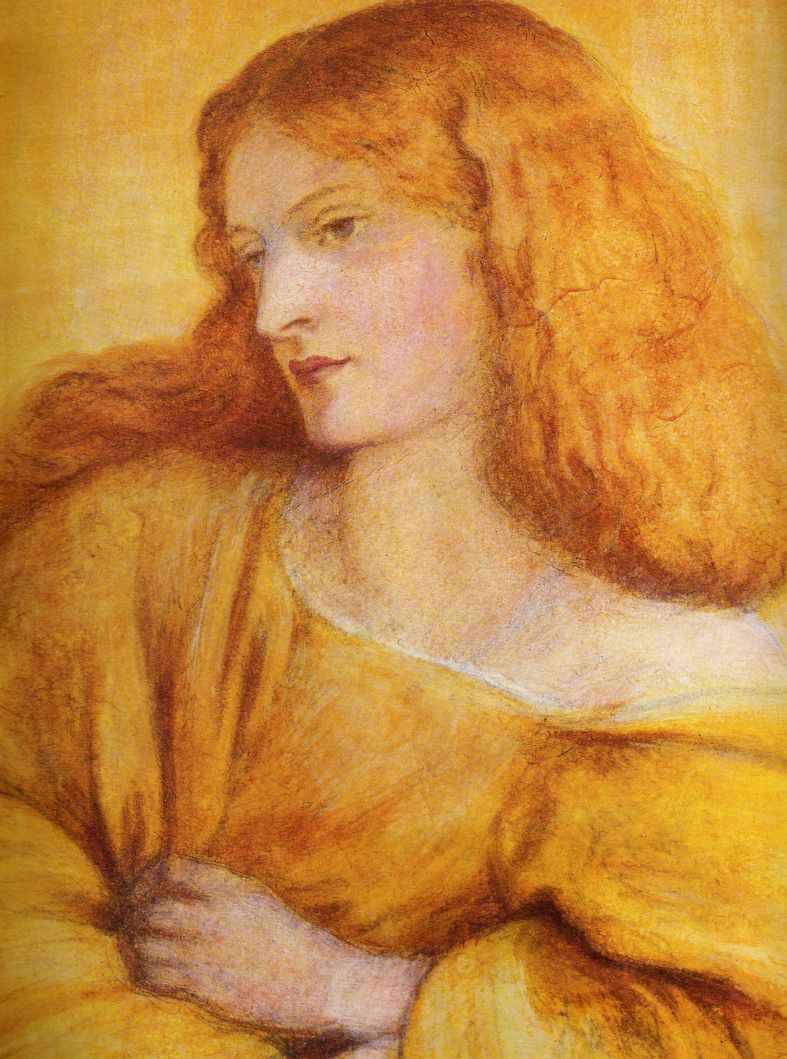
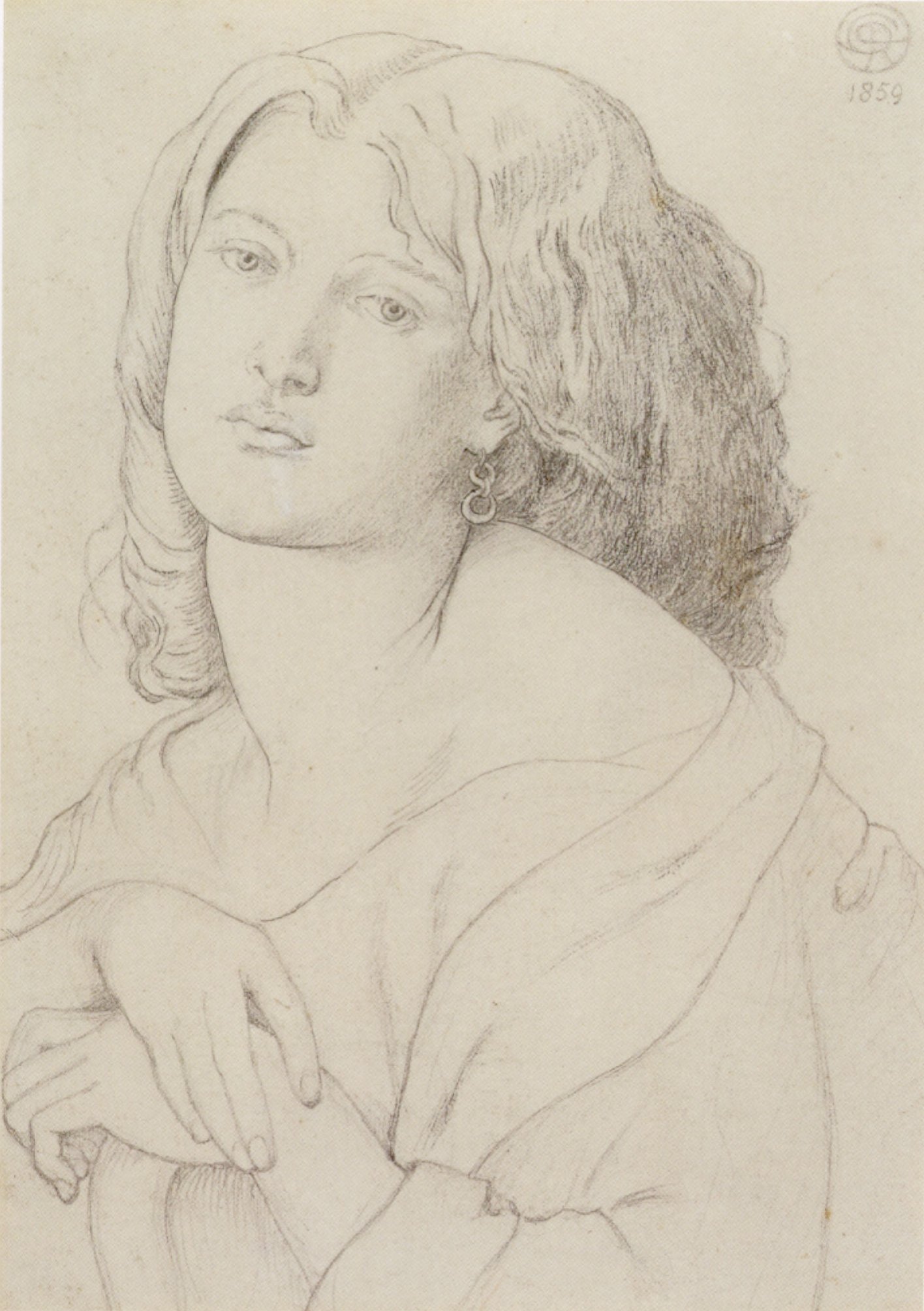
Study for Fair Rosamund

The more I study the Pre-Raphaelites, the more I discover that I often prefer the artist’s studies rather than the paintings themselves.  Although I love Fair Rosamund, I find the study has a sad and intimate feel that isn’t quite captured the same way in Rossetti’s finished product.  Here is Dante Gabriel Rossetti’s study for [...]


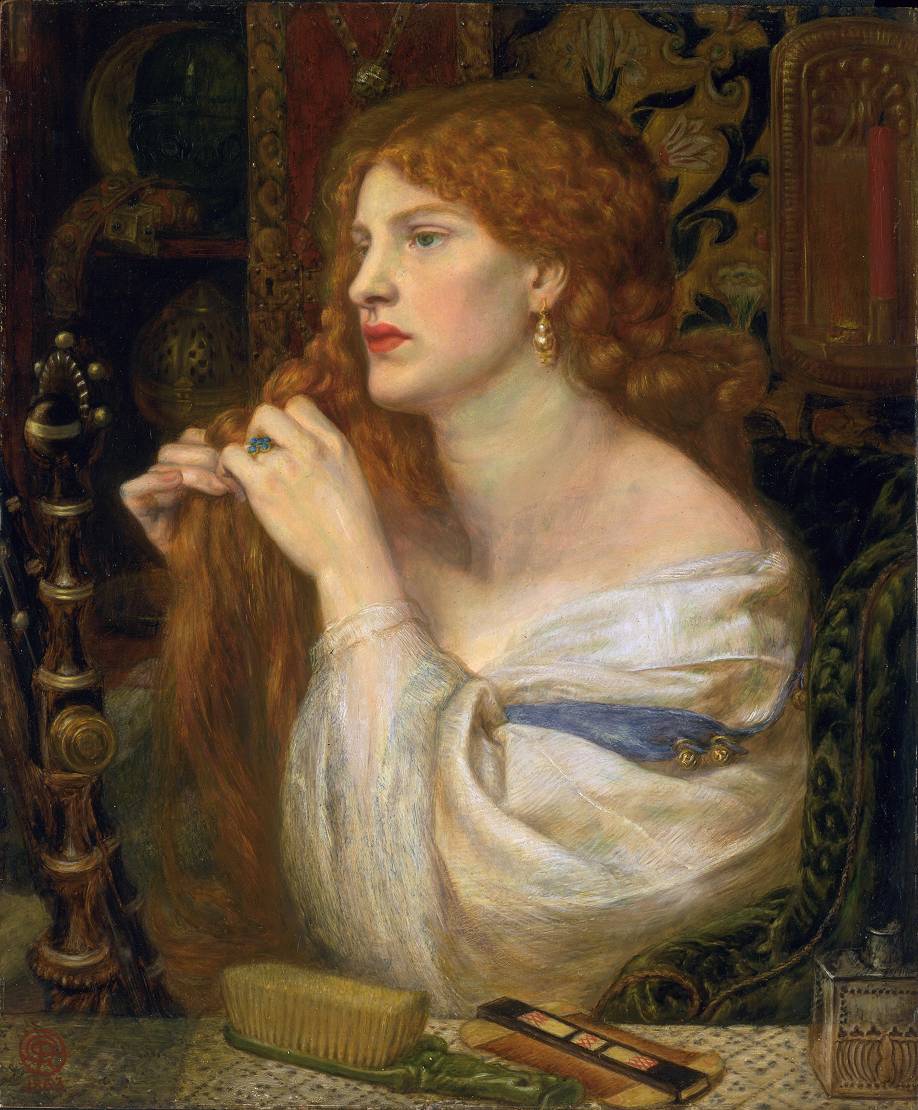
Rossetti and His Baubles

After the previous post about the hair pin (also see this post at The Beautiful Necessity)  I spent today collecting images of recurring jewelry in Rossetti paintings.  So far I have: Rossetti adorned her hair with a lovely white rose and a piece of jewelry that has always looked like an earring (to my modern [...]


Lucrezia Borgia

Lucrezia Borgia, painted by Dante Gabriel Rossetti 1860-1. I believe the model to be Fanny Cornforth. According to the Tate, Rossetti repainted her face several years after completing the painting. The tale of the Borgias captivated Rossetti. Lucrezia Borgia (1480-1519) was the member of a ruthless political family. Her father Rodrigo Borgia eventually became Pope [...]


The Blue Bower

The Blue Bower (1865) by Dante Gabriel Rossetti. This painting is yet another of Rossetti’s works that depicts a woman playing music. It is also Rossetti’s last major portrait of Fanny Cornforth. I find Rossetti’s detail in the blue and white tile background impressive. It is also reminiscent of the blue and white china that [...]


Link: The Merciless Lady

I’m enjoying the conversation at The Beautiful Necessity about Rossetti’s The Merciless Lady.  Come join in! addthis_url = ‘http%3A%2F%2Fpreraphaelitesisterhood.com%2F%3Fp%3D225′; addthis_title = ‘Link%3A++The+Merciless+Lady’; addthis_pub = ”;


Bocca Baciata

Elizabeth Siddal was Dante Gabriel Rossetti’s artistic and spiritual muse, playing Beatrice to his Dante. But Fanny Cornforth, pictured here in Rossetti’s Bocca Baciata, was a muse of a more sensual and seductive nature. Her hair is wild and free, her garment unbuttoned. The inspiration for this piece was a line from Bocaccio’s Decameron: “The [...]